

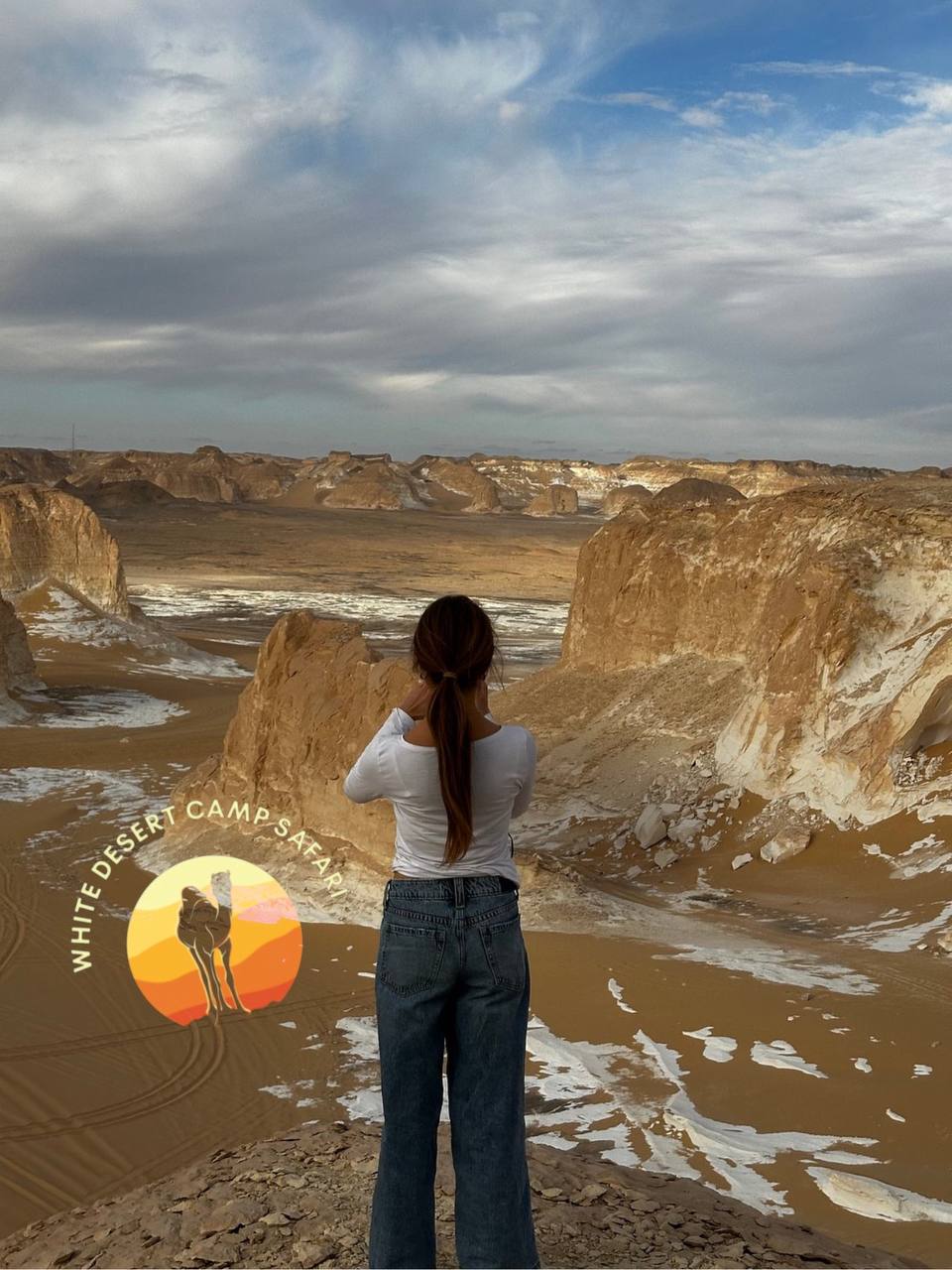

When people picture the Sahara desert, Egypt is not always the first country they think of, yet everything west of the Nile is part of it. Egypt’s Western Desert covers roughly two-thirds of the country and forms the north-eastern corner of the Sahara. This Sahara desert Egypt guide explains what the region actually looks like, where its different landscapes are, and what a realistic trip into it involves when you start from Cairo.
Sahara Desert Egypt: Where the Western Desert Fits
The Sahara stretches across North Africa, from the Atlantic coast to the Red Sea. In Egypt, the part west of the Nile Valley is called the Western Desert. East of the river lies the rockier Eastern Desert.
Most travellers head west: that is where the open sand, the oases and the rock landscapes are, and where roads and local guides make a trip practical.
Not one landscape, but several
The Egyptian Sahara is not an endless field of identical dunes. Within a few hours’ drive you pass through very different ground:
- Sand seas – long lines of high dunes, most famously the Great Sand Sea along the Libyan border.
- Chalk plains – the white, wind-carved landscape of the White Desert.
- Volcanic hills – the dark-capped hills of the Black Desert near Bahariya.
- Oases – green depressions with springs, palm groves and towns, such as Bahariya, Farafra and Siwa.
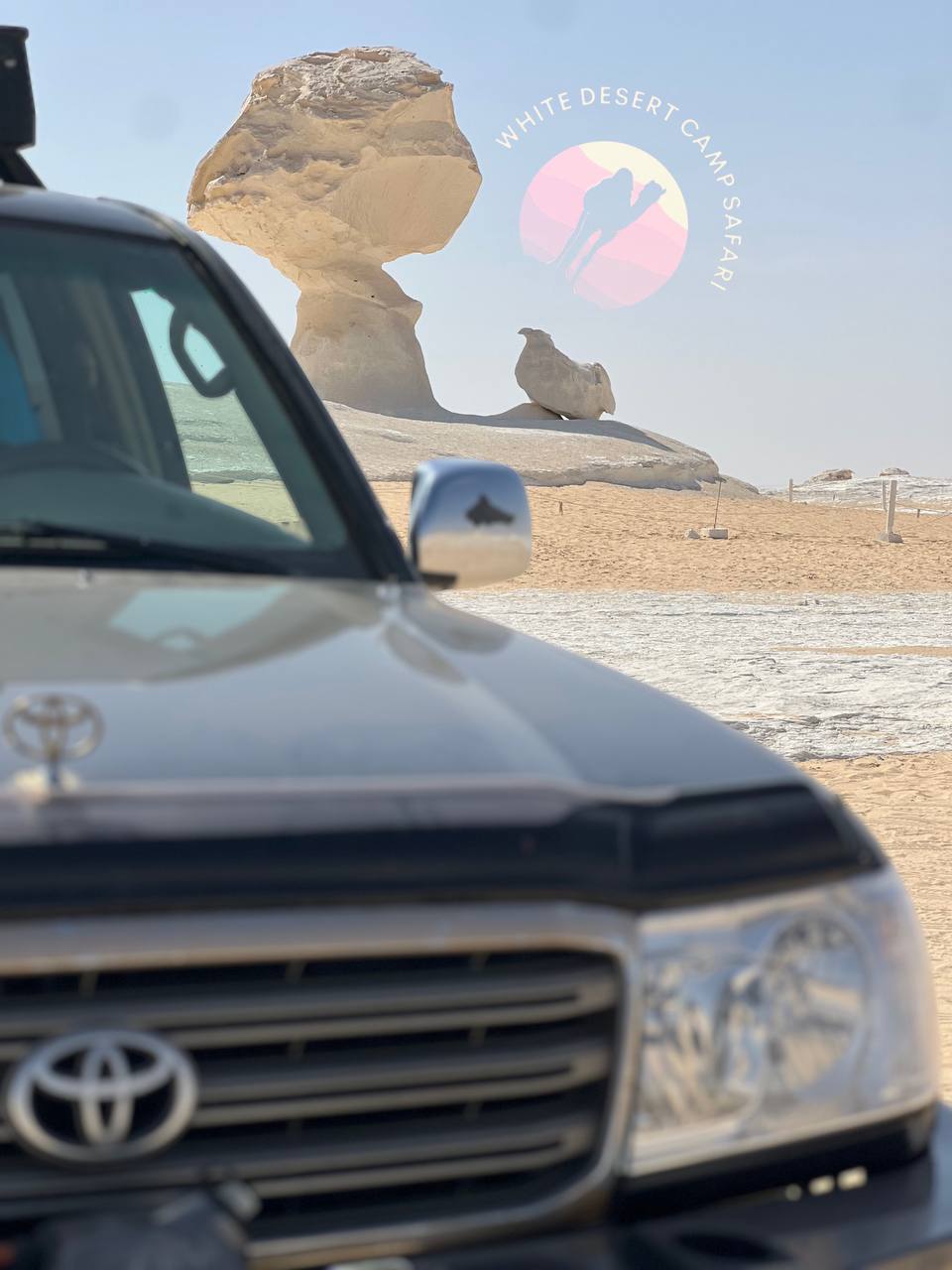
The Great Sand Sea
The Great Sand Sea is the classic Sahara picture: ridge after ridge of sand dunes running for hundreds of kilometres along the border between Egypt and Libya. It is one of the largest dune fields in the world and is mostly empty of roads and settlements.
The easiest way for a visitor to see it is from Siwa Oasis, on the northern edge of the sand sea. From Siwa, 4×4 trips go out into the dunes for the afternoon, with stops at cold and warm springs among the sand and a sunset over the dune crests. Our Siwa Oasis guide covers the town and how to get there.
How the White Desert Fits into the Sahara
The White Desert, between Bahariya and Farafra oases, is a small but very distinctive piece of the Sahara. Here the ground is chalk instead of sand. Wind carrying sand has worn the soft rock into pillars and mushroom shapes, leaving a landscape that looks like snow under a hot sky.
The area has been protected as White Desert National Park since 2002. It is also the most accessible Sahara camping area from Cairo, which is why most of our trips go there. Around it you find golden sand, the volcanic Black Desert to the north, and Crystal Mountain on the road in between.
What a Sahara Trip in Egypt Looks Like
A typical Sahara desert trip in Egypt starts with hotel pickup in Cairo or Giza. You drive about 4–5 hours (roughly 370 km) south-west on a paved road to Bahariya Oasis. From there you switch to a 4×4 with a local Bedouin guide and leave the asphalt.
A common day in the desert looks like this:
- Morning drive across the oasis and lunch in El Bawiti.
- Afternoon stops in the Black Desert and at Crystal Mountain.
- Sunset among the chalk formations of the White Desert.
- Camp set up by your guide, dinner cooked over the fire, Bedouin tea and a very dark, starry sky.
- Sunrise walk around the formations, breakfast, then the drive back or onward.
Longer trips continue south to Farafra, Dakhla and Kharga, or north-west to Siwa. Our overview of the Western Desert of Egypt and its five oases explains how those routes connect.
Choosing the length of your trip
- 2 days / 1 night – enough to see the main landscapes around Bahariya and the White Desert.
- 3–4 days – adds Djara Cave, quieter camp spots or a night in the oasis.
- 5 days or more – a loop through several oases, or a Siwa combination like the 5-day Siwa, Bahariya and White Desert tour.
If you are still deciding between the desert and other options like Fayoum or the Red Sea coast, see our comparison of desert safari types in Egypt.
Practical Notes for the Egyptian Sahara
- Season: roughly October to April is the comfortable period. Summer days are very hot.
- Cold nights: in winter, desert nights can be cold. Bring a warm layer even if the day was hot.
- Park fee: the White Desert National Park entrance fee is paid on the day.
- Passport: carry it for the checkpoints on the desert roads.
Plan Your Sahara Trip with Us
We run private 4×4 trips with local Bedouin guides, including hotel pickup in Cairo or Giza, camping gear and meals. Every program can be adjusted to your dates and interests. Prices depend on group size and dates — message us for a personal quote on WhatsApp +20 120 104 6769 or through our contact page.
FAQ
Is the White Desert part of the Sahara?
Yes. The White Desert lies in Egypt’s Western Desert, which is the north-eastern part of the Sahara. It is a chalk area rather than a sand sea, which gives it its white colour.
Can I see big sand dunes on a White Desert trip?
You will see sand and smaller dunes around Bahariya and the White Desert. For the long, high dune ridges of the Great Sand Sea, Siwa is the better base.
How far into the Sahara do you go from Cairo?
On a standard trip, you drive about 4–5 hours to Bahariya and then continue by 4×4 into the White Desert. Longer programs go further south to Farafra and beyond.
Do I need a permit to visit the Sahara in Egypt?
For the usual Bahariya and White Desert route, you only need your passport and the park entrance fee on the day. Remote routes, such as deep Great Sand Sea crossings, need special permits that we arrange in advance.
0 Comment